Introduction
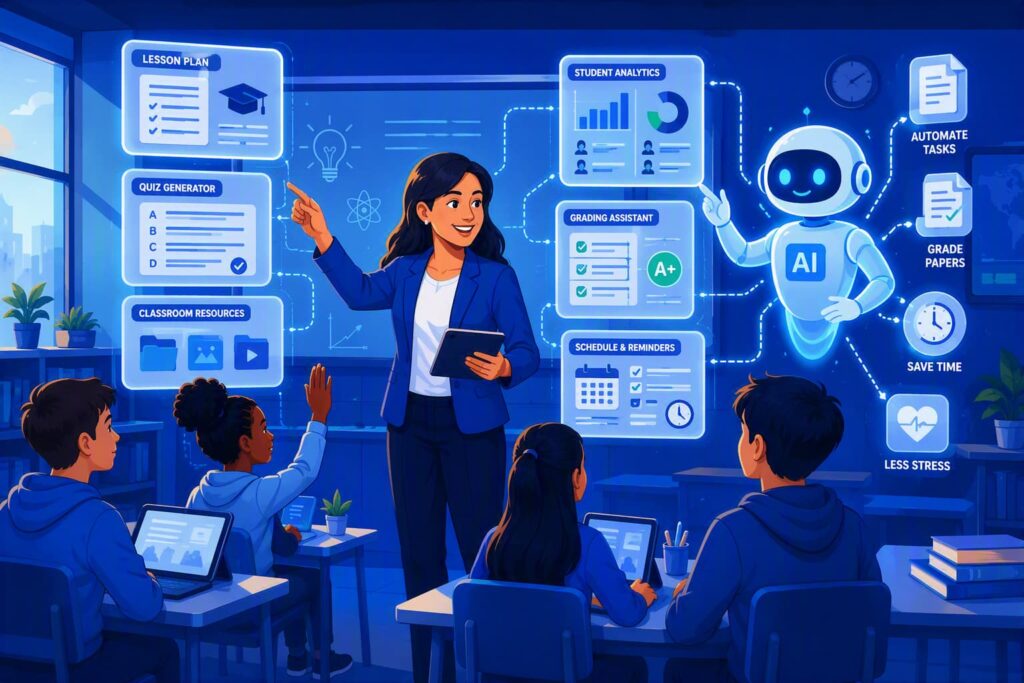
A teacher’s workday rarely ends when the final bell rings. Between lesson planning, grading assignments, tracking student progress, answering emails, and preparing classroom materials, many educators spend hours working beyond school hours. In 2026, the AI teacher assistant has emerged as a practical solution that helps manage these responsibilities more efficiently. Acting like an extra pair of hands, AI supports teachers by handling repetitive tasks, delivering valuable insights, and freeing up more time for meaningful student interactions and effective teaching.
What Are AI Teacher Assistants?
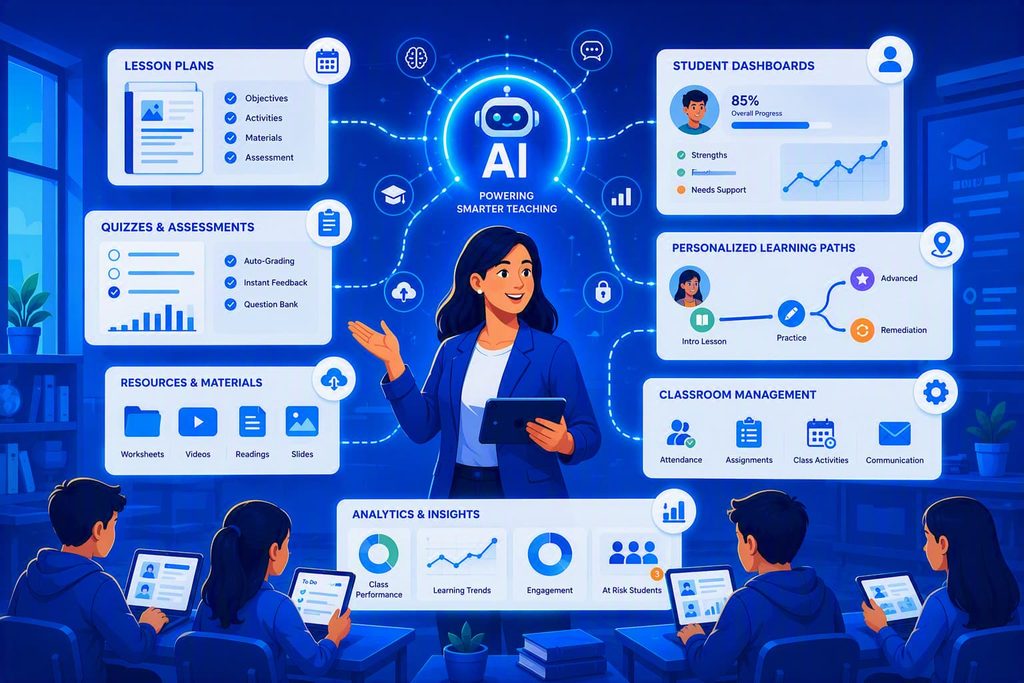
An AI teacher assistant is an artificial intelligence-powered tool designed to support educators with daily teaching and administrative tasks. Think of it as a highly efficient digital assistant that works alongside teachers rather than replacing them.
These tools can create lesson plans, generate quizzes, track student performance, provide personalized learning recommendations, and answer student questions. Many modern AI education tools also integrate with learning management systems, making classroom management simpler and more organized.
Just as a co-pilot helps a pilot focus on flying safely, an AI teacher assistant helps educators focus on teaching while routine tasks are handled automatically. From grading assignments to creating differentiated learning materials, these tools are becoming an important part of modern education.
As schools continue embracing digital learning, AI-powered solutions are transforming classrooms. The result is increased productivity, improved student engagement, and more effective learning experiences for students of all abilities.
Why Teachers Need AI Teacher Assistants in 2026
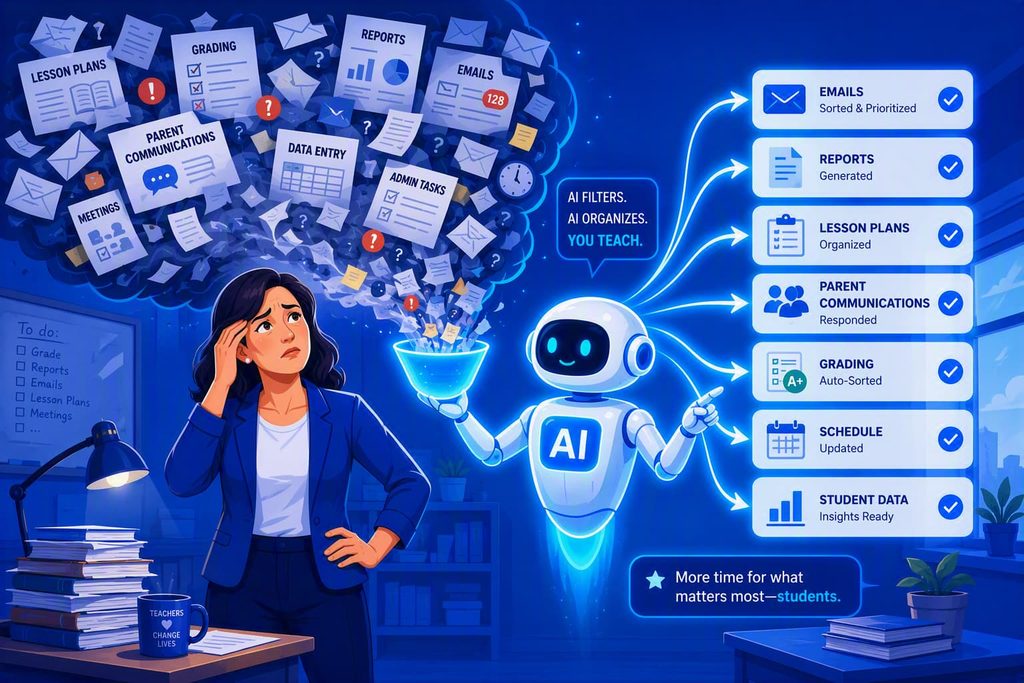
The demands placed on educators continue to grow. Teachers are expected to personalize learning, monitor student performance, communicate with parents, create engaging lessons, and manage administrative work, often with limited time and resources.
AI education tools are helping bridge this gap by reducing repetitive workloads and allowing teachers to focus on teaching rather than paperwork.
1. Helps Teachers Track Student Progress and Save Time
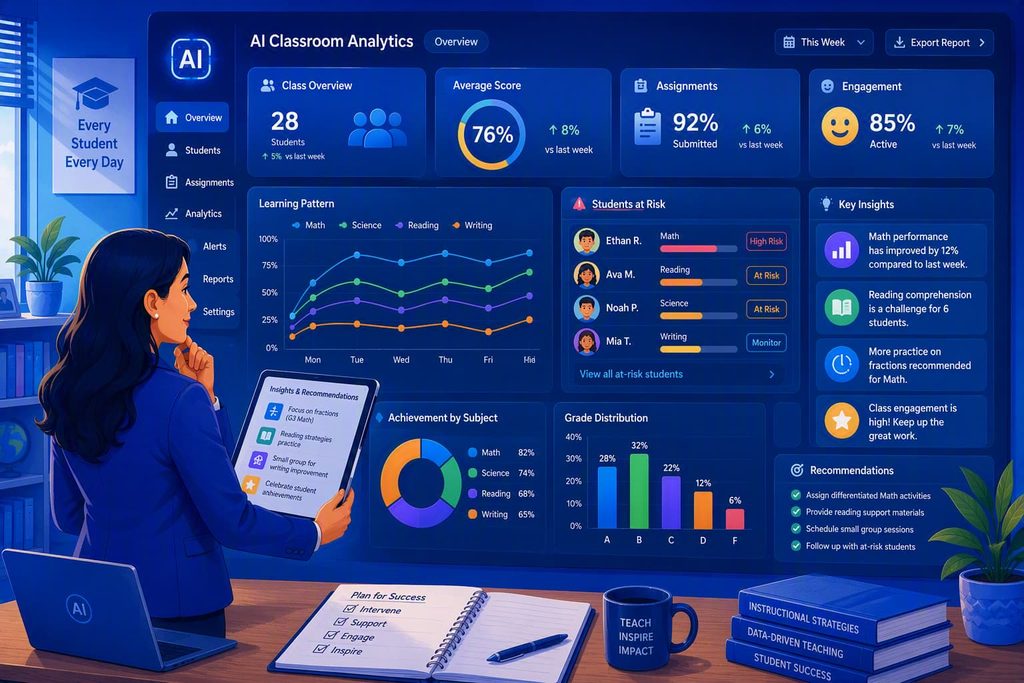
One of the biggest advantages of an AI classroom assistant is its ability to collect and analyze student data automatically. Instead of spending hours reviewing assignments and identifying learning gaps, teachers can receive instant insights.
AI can highlight struggling students, spot learning trends across a classroom, and generate easy-to-read reports. This allows educators to make informed decisions much faster.
For example, a middle school science teacher using Microsoft Copilot can quickly identify which students are consistently struggling with a specific topic and receive recommendations for additional learning activities.
Many educators also use AI for AI lesson planning, reducing preparation time while maintaining lesson quality. By automating repetitive tasks, teachers can reclaim several hours each week.
2. Supports Personalized Learning
Every student learns differently. Some need extra practice, while others are ready for more advanced challenges.
AI can adapt lessons, assignments, and learning resources based on student performance and learning preferences. This creates customized learning experiences that help students remain engaged and motivated.
Many modern AI study tools demonstrate how artificial intelligence can provide targeted support, personalized learning pathways, and individual academic guidance.
The result is a classroom where students receive support tailored to their specific learning needs.
3. Gives Quick Feedback to Students
Students learn best when they receive feedback immediately.
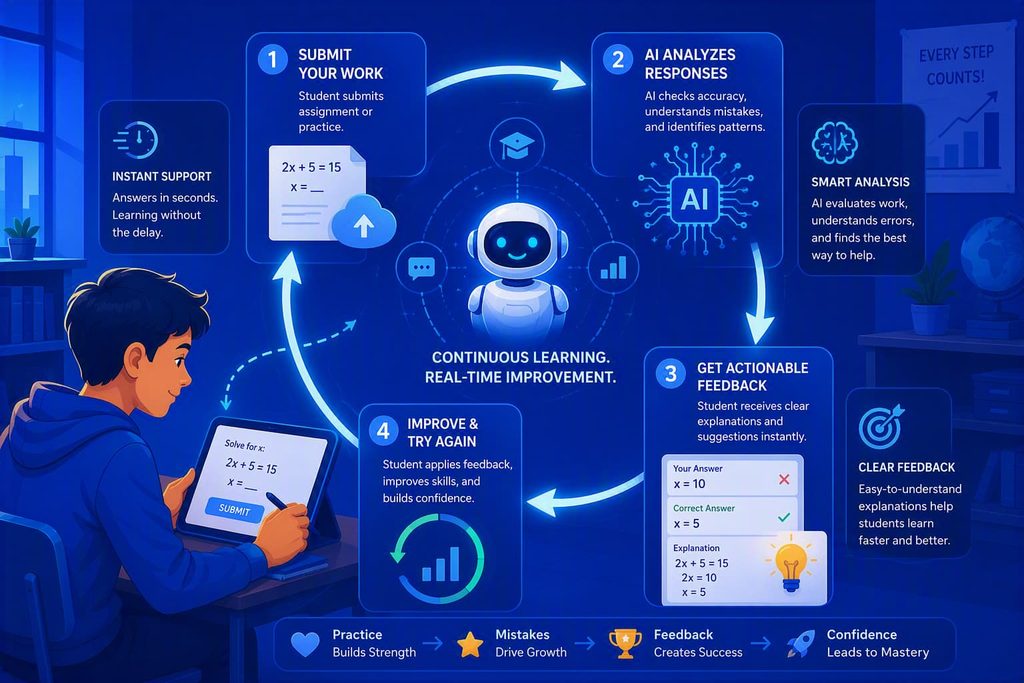
Instead of waiting several days for assignment reviews, AI-powered systems can analyze quizzes, identify mistakes, and provide instant suggestions for improvement.
Imagine a student completing a math exercise and receiving immediate feedback explaining not only what was incorrect but why it was incorrect. This helps students correct misunderstandings quickly and build confidence in their learning journey.
How AI Teacher Assistants Work
AI teacher assistants combine natural language processing, machine learning, and educational analytics to support teaching and learning. While the technology behind them is advanced, the process is surprisingly simple.
1. Understand Questions
Modern AI systems can understand student and teacher questions written in everyday language.
Whether someone asks a complex science question or requests a summary of a lesson, the AI identifies the intent and context behind the query.
For example, if a student asks, “Why do fractions need common denominators?” the AI understands the concept being discussed and prepares an explanation appropriate to the student’s learning level.
This makes conversations feel natural and intuitive.
2. Find and Explain Answers
Once a question is understood, the AI searches its knowledge base and generates relevant responses.
Unlike traditional search engines that simply provide links, AI can explain concepts in simple language, offer examples, and break down difficult topics step by step.
Many AI tutoring solutions use this approach to help learners understand challenging subjects more effectively.
For instance, when teaching photosynthesis, an AI assistant may compare plants to tiny solar-powered factories that convert sunlight into energy. These simple analogies make learning easier and more memorable.
3. Support Learning and Feedback
An AI teacher assistant doesn’t stop at answering questions. It continuously supports learning by monitoring student performance and providing recommendations.
For example, a student struggling with reading comprehension may receive additional practice exercises, while advanced learners may receive enrichment activities that match their skill level.
Through classroom automation with AI, teachers gain access to meaningful insights without spending hours analyzing data manually. The AI acts like a teaching partner that helps identify opportunities for improvement and supports both educators and learners throughout the educational journey.
Common Tasks AI Teacher Assistants Can Handle
AI technology is transforming how classrooms operate by automating routine tasks and improving efficiency.
1. Personalized Learning Support
Personalized learning is one of the strongest use cases for AI.
An AI teacher assistant can recommend activities based on performance levels, learning speed, and subject mastery. Students who need additional practice receive reinforcement materials, while advanced learners get more challenging content.
Many modern AI study tools help create customized learning experiences that adapt to individual student needs.
2. Tracking Student Progress
Monitoring dozens or even hundreds of students can be overwhelming.
AI can automatically track attendance, assignment completion, quiz scores, participation rates, and overall performance trends.
Teachers receive dashboards that highlight important insights, making it easier to identify students who may need additional support before larger academic challenges develop.
3. Managing Class Tasks
Administrative work often consumes valuable teaching time.
AI can assist with:
- Creating quizzes and assessments
- Drafting lesson plans
- Generating classroom announcements
- Organizing learning resources
- Scheduling reminders
- Summarizing student performance
This type of classroom automation with AI reduces paperwork and administrative burden.
Instead of spending evenings handling repetitive tasks, educators can devote more attention to mentoring students, refining instruction, and supporting classroom engagement.
AI Teacher Assistant Tools Comparison
The market for AI education tools continues to expand rapidly. Different platforms serve different educational needs.
Many tools include capabilities similar to a lesson-plan generator, helping educators save time while improving instructional quality.
Comparison Table: Popular AI Teacher Assistants in 2026
| Tool | Best For | Key Features | Free Plan |
| Microsoft Copilot | Lesson planning & productivity | Content creation, summaries, classroom materials | Yes |
| MagicSchool AI | K-12 teachers | Lesson plans, rubrics, IEP support | Yes |
| Khanmigo | Student tutoring | Guided learning assistance | Limited |
| ChatGPT | General teaching support | Content generation, brainstorming | Yes |
| Google Gemini | Research & content creation | Educational content generation | Yes |
| SchoolAI | Classroom engagement | Student interaction tools | Limited |
Which AI Teacher Assistant Is Best?
Each platform offers unique strengths, and the best option depends on specific classroom needs.
Microsoft Copilot is ideal for educators already using Microsoft 365 and looking to improve lesson planning and productivity. Official: copilot
MagicSchool AI is built specifically for educators and offers tools designed for K-12 teaching environments. Official: magicschool
Khanmigo shines in student tutoring and guided learning support. Official: khanacademy
ChatGPT is excellent for brainstorming, content generation, and instructional planning. Official: https://chatgpt.com/
Google Gemini is particularly useful for research and educational content creation. Official: gemini
SchoolAI focuses on classroom engagement and student interaction. Official: schoolai.com
Rather than looking for a single “best” tool, educators should identify which platform aligns most closely with their teaching goals and classroom requirements.
Best AI Teacher Assistant Tools for Educators in 2026
As AI capabilities continue to evolve, several platforms stand out because they solve real classroom challenges and reduce teacher workload.
1. Creates Learning Materials Quickly
Creating quality educational resources can be time-consuming.
Tools such as Microsoft Copilot, MagicSchool AI, and ChatGPT can generate worksheets, quizzes, lesson summaries, discussion prompts, rubrics, and study guides within minutes.
For example, a teacher preparing a week-long unit on climate change can create learning objectives, classroom activities, and assessments far more quickly than through manual planning alone.
Educators interested in improving AI lesson planning often discover significant reductions in preparation time.
2. Improves Student Engagement
Students are more likely to stay engaged when learning feels personalized and interactive.
AI assistants can support adaptive quizzes, personalized tutoring, interactive discussions, and real-time question answering.
These features help create dynamic classroom experiences that keep learners involved and motivated.
3. Available Anytime
Unlike traditional support resources, AI assistants are available around the clock.
Students can ask questions, review concepts, and receive explanations outside classroom hours. Teachers can also create resources whenever they need them.
This accessibility makes AI a valuable support tool for both teaching and learning.
How to Choose the Right AI Teacher Assistant
With so many options available, selecting the right AI tool requires careful evaluation.
Additional resources covering broader AI tools for education can help educators explore available solutions and compare features.
1. Gives Accurate Answers
Accuracy should always be the top priority.
Look for tools that provide reliable educational content, maintain transparency, and allow educators to review outputs before sharing them with students.
Regular updates and established educational partnerships are positive indicators of quality.
2. Supports Different Learning Needs
A good AI teacher assistant should accommodate different learning styles, grade levels, and educational requirements.
Features such as multilingual support, accessibility tools, adaptive learning pathways, and personalized recommendations can make a significant difference.
The ideal solution should fit naturally into existing teaching practices while enhancing learning outcomes.
Challenges and Limitations of AI Teacher Assistants
Despite their benefits, AI teacher assistants are not perfect.
1. Cannot Understand Emotions Well
AI can analyze data, but it cannot fully understand human emotions, classroom dynamics, or personal circumstances the way teachers can.
2. Sometimes Gives Wrong Answers
AI may occasionally generate inaccurate information. Human review remains essential before using AI-generated content in educational settings.
3. May Not Understand Every Student’s Needs
Students have unique social, emotional, and learning challenges. AI can provide support, but it cannot replace the empathy, judgment, and experience of a skilled educator.
The most effective approach combines AI assistance with human expertise.
Conclusion
The future of education is not about replacing teachers. It is about empowering them with better tools.
An AI teacher assistant acts as the extra pair of hands every busy educator needs, helping manage administrative work, streamline lesson preparation, support personalized learning, and provide valuable insights into student performance.
Teachers bring creativity, empathy, leadership, and human connection to the classroom. AI brings speed, efficiency, and data-driven support. Together, they create a more effective learning environment where educators can focus on inspiring students while technology handles routine tasks.
As AI education tools continue to improve, the most successful classrooms in 2026 will be those that balance human expertise with intelligent technology.