You know that moment when you walk into a restaurant and the server somehow knows your usual drink? That’s the kind of magic AI is bringing to dining except now it’s happening behind the scenes in ways that make everything smoother and more personal.
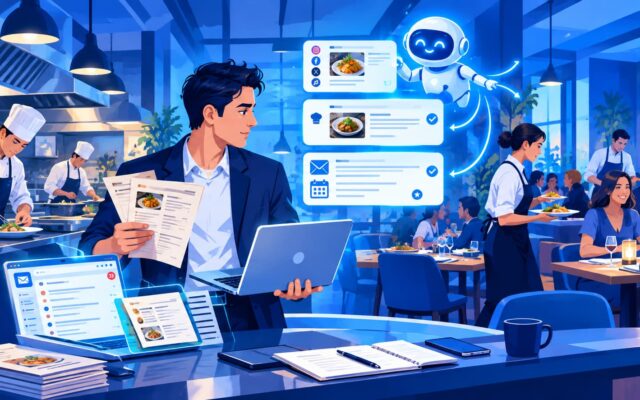
I didn’t really get the restaurant tech scene until I helped a friend with his small café. He was drowning in paperwork, losing money on wasted ingredients, and scheduling staff was a nightmare. Then he implemented a simple AI tool for inventory. Within three weeks, his waste dropped by 30%. That’s when it clicked for me this isn’t about fancy robots. It’s about making life easier.
Let me walk you through what’s actually happening in restaurants right now.
The Personal Menu: When Your Food Knows You
Think about the last time you went to a restaurant. The server handed you the same menu as everyone else, right? Now imagine a menu that already knows you don’t like cilantro, that you’re vegetarian, or that last time you loved the salmon special.
That’s what AI is doing now. It’s not magic it’s just smart data collection. Here’s how it works:
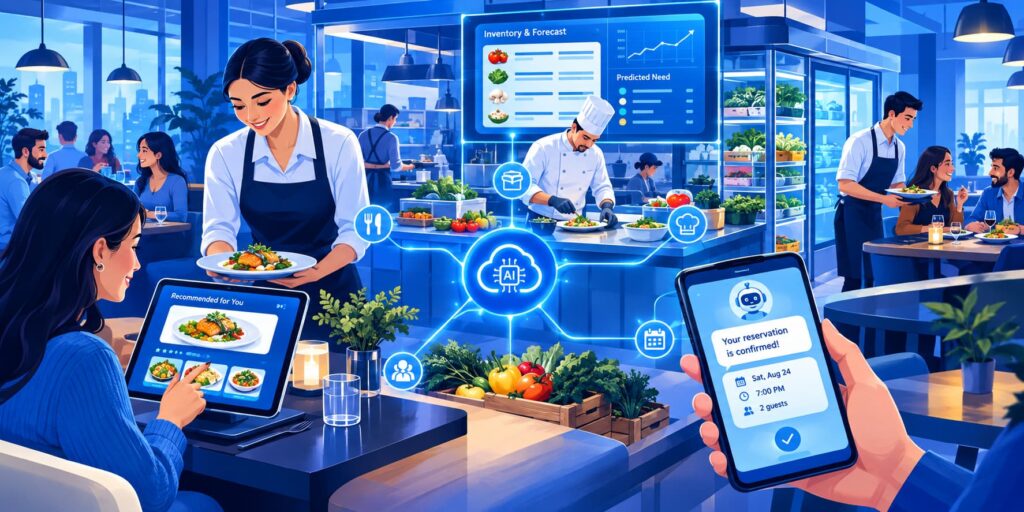
The real example: A restaurant tracks what you order on your visits. Maybe you always skip desserts but order extra vegetables. An AI system notices this pattern. Next time you visit, it suggests vegetable-forward dishes and highlights lighter options. No pushy sales pitch just helpful suggestions based on you.
This does two things at once:
- You get a better experience (no scanning through dishes you’ll ignore)
- The restaurant wastes less time taking orders and suggesting things you’d hate
It’s like having a server who actually remembers everything you’ve ever said without the creepy feeling.
For restaurant owners: This means happier customers, faster orders, and less food waste. For diners: it’s just the restaurant being thoughtful.
Behind the Scenes: The Kitchen’s Secret Helper
Here’s something people don’t see: a restaurant’s profit margin is razor-thin. Waste is the enemy.
Let me tell you what I learned when helping that café: they were throwing out fresh herbs every few days because they ordered based on guesses. Their manager would think, “Well, we sold a lot of basil last Tuesday, so I’ll order extra basil this Tuesday.” Sometimes that worked. Most times, it didn’t.
An AI inventory system changed everything. It looks at:
- What actually sells (not what you think sells)
- The weather (rainy days = more soup orders)
- Special events (that wedding party coming Friday night)
- Seasonality (tomatoes are cheaper in summer)
The system then predicts exactly how much the restaurant needs. It’s like having a really smart assistant who remembers everything and never gets tired.
Real benefits:
- Less spoiled food → more money in the owner’s pocket
- Fresher ingredients → better tasting meals
- Better predictions → less last-minute stress
And staffing? AI helps restaurants figure out when they’ll be busy. Instead of having a manager guess and either overstaffing (wasting money) or understaffing (stressing everyone out), the system predicts traffic and suggests optimal staff schedules.
Talking to Robots (Without Feeling Weird)
It’s 9 PM on a Saturday. You want a table at your favorite restaurant. But everyone’s on the phone, busy taking orders. So you wait. And wait.
Now, imagine texting the restaurant or asking on their website: “Got a table for two tomorrow at 7 PM?”
A smart chatbot answers immediately: “We have two spots left at 7:15 or 8:00. Which works better?” No holding. No waiting. You book it in 30 seconds.
This is AI chatbots, and honestly? People love them. They’re fast, they don’t need a break, and they handle the basic stuff so human staff can focus on what actually matters making sure your experience is great.
Beyond reservations: These chatbots answer questions like “Are you gluten-free?” or “What’s in the pesto?” They’re not trying to replace servers. They’re replacing hold music and frustration.
Some restaurants are even using facial recognition spotting when a regular customer walks in and alerting staff. “Hey, the Johnson family just arrived they always love table 12.” It feels personal because it is personal, just with a technology assist.
Finding Your People: Smart Marketing
Here’s the truth: most restaurant marketing is a shot in the dark. You post on social media, send emails to everyone, and hope someone cares.
AI changes this. Instead of treating all customers the same, it figures out who actually loves what.
Here’s the practical breakdown:
A taco restaurant might discover that:
- Young professionals in downtown love late-night happy hours
- Families on the north side order weekend brunch
- People who tried the vegetarian menu once tend to order it again
So instead of sending the same “50% off everything” email to everyone, the restaurant sends targeted offers:
- Downtown crowd: “Happy hour pricing after 9 PM”
- Families: “Bring the kids Sunday morning, kids eat free”
- Vegetarians: “New seasonal veggie tacos just for you”
Each group sees something that actually matters to them. Better offers mean people actually show up. Better ROI means the restaurant can keep doing this.
Why this matters for diners: You get deals that actually apply to you, not random promotions for things you’d never order anyway.
The Wild Stuff That’s Coming (Sooner Than You Think)
Okay, here’s where it gets interesting. We’re not just talking about optimization anymore.
Robot servers are already at some restaurants. They deliver food to your table, reducing wait times and freeing up human staff for actual service. They’re not there to replace people they’re there to handle the repetitive stuff.
AI cooking assistance helps chefs by monitoring food temperature, cooking times, and consistency. Some systems even help with recipe creation and portion control. A sous chef that never gets tired.
Predictive ordering means suppliers can deliver ingredients exactly when they’re needed, not before. It’s like meal prep at scale.
The crazy part? Most of this exists right now. It’s not coming in 10 years. Some places are using it today.
Quick Comparison: AI Tools You’ll Actually See
Here’s what’s real versus what’s still mostly hype:
| AI Application | What It Does | How Ready It Is | Real Impact | Cost Level |
|---|---|---|---|---|
| Personalized Menus | Customizes dishes based on your history | Available Now | High – Better experience & less waste | Moderate |
| Inventory Management | Predicts what to order based on sales data | Available Now | Very High – Saves 20-30% on waste | Moderate |
| Chatbot Reservations | Books tables & answers questions 24/7 | Available Now | High – Faster, happier customers | Low-Moderate |
| Staff Scheduling AI | Predicts busy times, optimizes staff shifts | Available Now | Moderate-High – Less stress, better coverage | Moderate |
| Facial Recognition | IDs regular customers, alerts staff | Limited Use | Medium – Creates nice moments | High |
| Robotic Servers | Delivers food, clears tables | Emerging | Medium – Novelty + efficiency | High |
| AI Cooking Assistance | Monitors temps, consistency, recipes | Limited Use | Medium – Quality control | High |
| Predictive Marketing | Sends targeted offers to right customers | Available Now | High – Better conversion rates | Low-Moderate |
| Social Media AI | Auto-responds, finds trends, schedules posts | Available Now | Moderate – Saves time | Low |
Translation: The stuff that works is already here. The robots are cool but still new. If you’re a restaurant owner, start with inventory and chatbots. If you’re a customer, you’ll notice personalization and faster reservations first.
What This Actually Means for You
If you run a restaurant, you don’t need to do everything at once. Start with the pain point. Is waste killing you? Fix that first. Is booking chaos your problem? Start with a chatbot. You’re not running a tech company you’re running a restaurant that happens to use smart tools.
If you eat out, the changes might be subtle at first. Better suggestions. Faster reservations. Fresher food. But the trend is clear: restaurants are getting smarter about understanding what you want and delivering it faster.
The bottom line: AI in restaurants isn’t about replacing humans. It’s about removing frustration for owners dealing with spreadsheets and for diners waiting for tables. It’s about getting the boring stuff done quickly so people can focus on what actually matters: great food and great experiences.
The future of dining isn’t just about what’s on your plate. It’s about how fast you get it there, how well it matches what you love, and how much less waste happens behind the scenes.