Introduction
Healthcare is evolving rapidly, and artificial intelligence is becoming one of the most valuable tools in modern medicine. In 2026, AI for doctors is helping physicians reduce administrative workloads, improve diagnostic accuracy, and spend more quality time with patients instead of computer screens and paperwork.
Key Takeaways
- AI for doctors helps reduce administrative workload and improve clinical efficiency.
- AI medical scribes can save physicians significant documentation time every day.
- Healthcare AI tools support faster disease detection and more accurate diagnoses.
- Predictive analytics helps identify health risks before complications develop.
- AI enhances physician decision-making but does not replace medical expertise.
- The biggest advantage of AI is allowing doctors to spend more time with patients.
What Is AI for Doctors?
AI for doctors is the use of artificial intelligence technology to help physicians automate documentation, analyze medical data, improve diagnosis accuracy, identify health risks, and streamline patient care workflows. Popular healthcare AI tools include AI medical scribes, medical imaging software, diagnostic support platforms, predictive analytics systems, and medical documentation AI solutions.
AI for doctors refers to artificial intelligence technologies designed to support physicians in clinical, administrative, and decision-making tasks. These systems analyze large amounts of medical data, identify patterns, and provide insights that help healthcare professionals work more efficiently.
Think of AI as a highly capable medical assistant working behind the scenes. It can organize patient records, summarize medical histories, analyze scans, assist with diagnoses, and automate repetitive tasks.
Today, many healthcare organizations use healthcare AI tools to streamline workflows and improve patient outcomes. These tools range from AI medical scribes that create clinical notes automatically to advanced diagnostic systems that support clinical decision support and evidence-based medicine.
For more insights into AI healthcare tools, readers can explore additional resources focused on healthcare and medicine applications.
Why Doctors Are Turning to AI in 2026
Healthcare professionals face increasing patient loads, growing administrative demands, and higher expectations for quality care. AI helps reduce these pressures while improving efficiency and accuracy.
Why AI Adoption Is Growing So Quickly
Several trends are accelerating AI adoption across healthcare:
- Growing physician burnout caused by administrative workloads.
- Increasing patient volumes and healthcare staff shortages.
- Rising demand for faster diagnoses and treatment plans.
- Wider adoption of Electronic Health Records (EHRs).
- Advances in predictive analytics and healthcare automation.
According to healthcare industry research, physicians often spend a substantial portion of their workday on documentation and administrative tasks. This growing burden is one of the biggest reasons healthcare organizations are investing in AI-powered workflow automation and medical documentation tools.
3.1 Faster Disease Detection
AI systems can analyze medical data within seconds, identifying patterns that may indicate early signs of disease. This enables physicians to begin treatment sooner and improve patient outcomes.
For example, AI can review thousands of medical images and quickly highlight suspicious abnormalities requiring further investigation.
3.2 More Accurate Diagnoses
Modern AI platforms combine symptoms, patient history, laboratory results, and clinical guidelines to provide diagnostic support.
Like having a second expert reviewing every case, AI helps doctors consider possibilities they may not immediately recognize.
3.3 Better Patient Care
By reducing administrative workloads, AI allows physicians to devote more attention to patients. This creates stronger doctor-patient relationships and enables more personalized care.
How AI Helps Doctors Spend More Time With Patients
One of the biggest advantages of AI is its ability to remove administrative barriers that take physicians away from direct patient care.
4.1 Faster Test Analysis
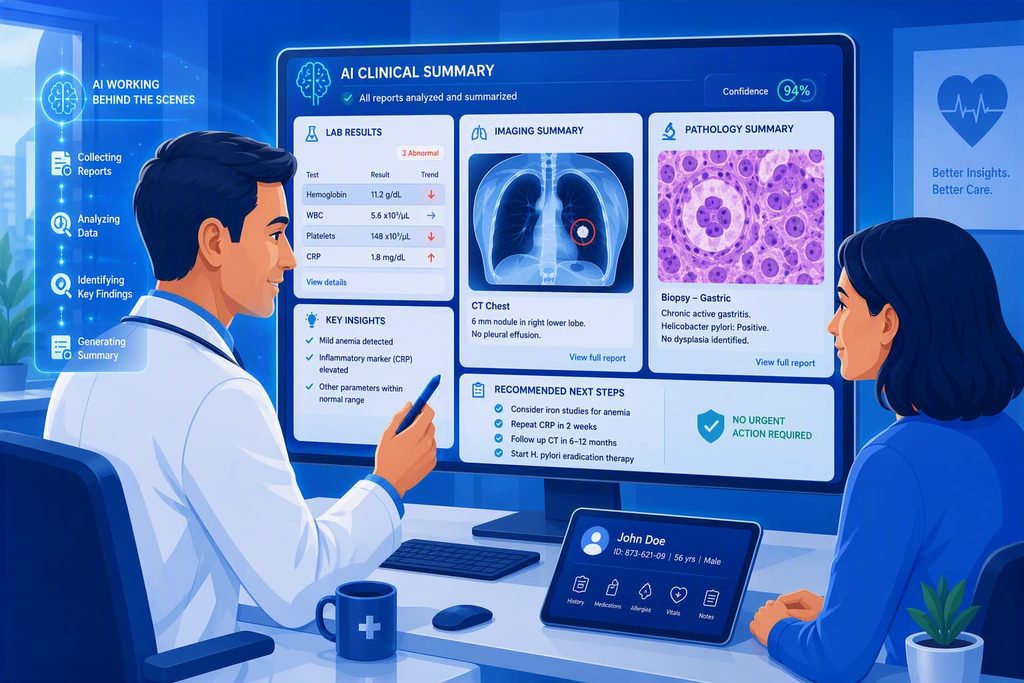
Doctors spend significant time reviewing blood tests, imaging reports, pathology results, and other diagnostic information.
AI can quickly analyze these reports and highlight key findings. Instead of searching through pages of data, physicians receive concise summaries that support faster decisions.
4.2 Faster Access to Patient Information
Medical records can contain years of patient history spread across multiple systems.
AI organizes information into easy-to-read summaries, helping physicians quickly access:
- Past diagnoses
- Current medications
- Allergies
- Lab results
- Treatment history
This faster access reduces search time and improves appointment efficiency.
4.3 Less Paperwork, More Patient Care
Documentation is one of healthcare’s biggest challenges.
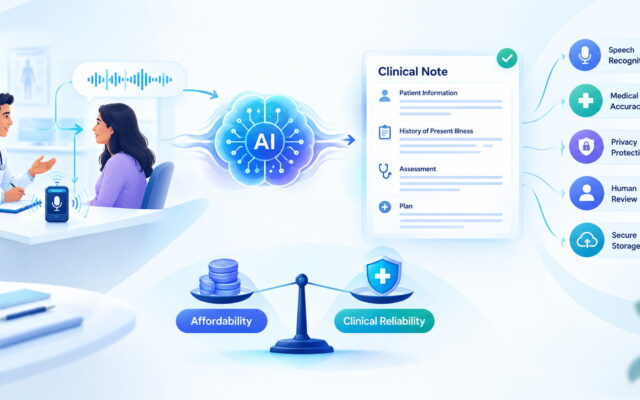
Medical documentation AI solutions automate note-taking and record generation. An AI medical scribe can listen during patient consultations and automatically create structured clinical notes using ambient documentation technology.
As a result, physicians spend less time typing and more time engaging with patients.
Healthcare professionals interested in broader workflow improvements can explore clinical AI solutions used across nursing and allied health environments.
Expert Insight
The most successful healthcare organizations are not using AI to replace doctors. Instead, they are using AI to automate repetitive administrative tasks such as documentation, scheduling, and record management. This allows physicians to focus on clinical decision-making, patient communication, and delivering higher-quality patient care.
Top AI Tools Doctors Are Using in 2026
Before looking at specific categories, here’s a comparison of the most common AI solutions physicians use today.
Best AI Tools for Doctors in 2026: Comparison Table
| Tool Type | Main Function | Time Savings | Accuracy Impact | Best For |
| AI Medical Scribe | Automated clinical note creation | High | Medium | Primary Care, Specialists |
| AI Medical Assistant | Scheduling and patient communication | Medium | Low | Clinics and Hospitals |
| AI Imaging Tool | Scan analysis and abnormality detection | High | High | Radiology |
| AI Diagnostic Support Tool | Clinical decision support | Medium | High | All Medical Specialties |
| AI Drug Research Tool | Treatment and medication insights | Medium | High | Researchers and Specialists |
| Predictive AI Platform | Health risk prediction | Medium | High | Cardiology and Chronic Disease Management |
Popular Examples of AI Tools Used by Doctors
| Tool | Category | Primary Use |
| Dragon Copilot | AI Medical Scribe | Clinical Documentation |
| Suki AI | Voice Documentation | Medical Notes |
| Abridge | Medical Documentation AI | Visit Summaries |
| Aidoc | Medical Imaging AI | Radiology Support |
| Viz.ai | Imaging and Stroke Detection | Emergency Care |
| Glass Health | Diagnostic Support | Clinical Decision-Making |
Why This Matters
The greatest value of AI is not replacing doctors. Instead, it removes repetitive tasks so physicians can focus on patient care. Different practices benefit from different healthcare AI tools depending on their workflow challenges.
5.1 AI Medical Assistants
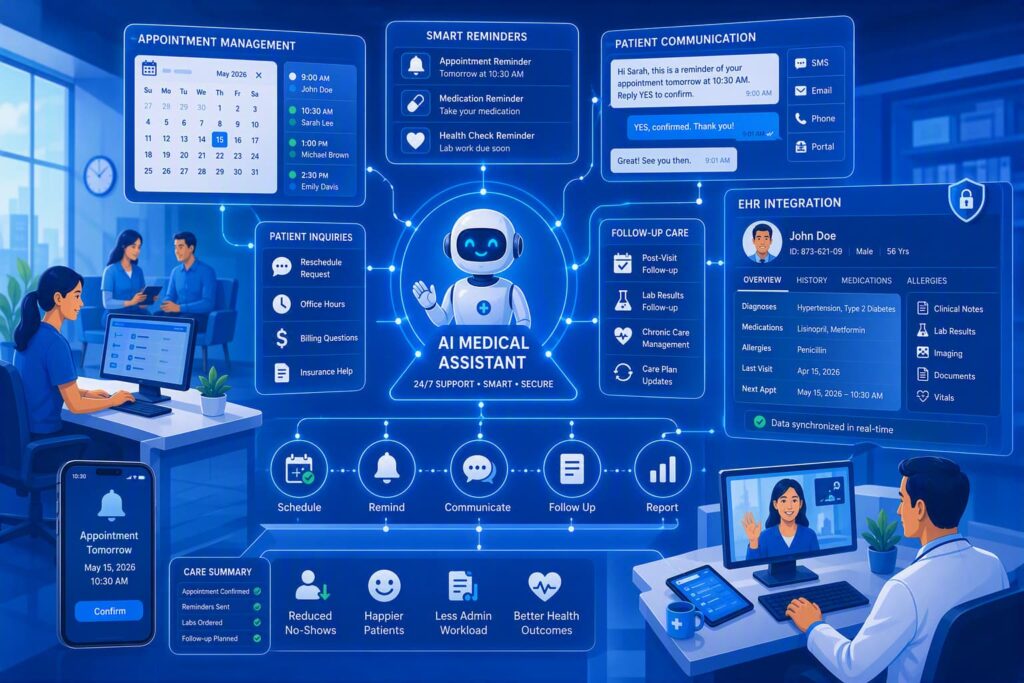
AI medical assistants function like digital support staff.
They can:
- Schedule appointments
- Send reminders
- Manage patient communication
- Organize records
- Coordinate follow-ups
These tools reduce front-office burdens while improving operational efficiency.
Many AI medical assistants now integrate directly with Electronic Health Records (EHRs). This integration improves medical workflow management by reducing duplicate data entry and helping staff access patient information faster.
5.2 AI for Medical Imaging
Medical imaging remains one of the most successful AI applications in healthcare.
AI systems can analyze:
- X-rays
- MRI scans
- CT scans
- Mammograms
- Ultrasound images
These tools help prioritize critical cases and identify abnormalities faster.
Like having another experienced radiologist reviewing every image, AI provides valuable support without replacing human expertise.
5.3 AI Diagnostic Support Tools
Diagnostic support systems analyze multiple data sources to assist clinical decision-making.
Benefits include:
- Differential diagnosis suggestions
- Symptom analysis
- Clinical guideline recommendations
- Rare disease identification
These platforms use machine learning and clinical decision support technology to analyze symptoms, patient history, laboratory data, and medical literature. They help physicians make faster evidence-based decisions while maintaining complete clinical oversight.
Doctors remain in control while using AI-generated insights as an additional resource.
5.4 AI-Powered Drug Research Tools
AI is helping accelerate drug discovery and treatment optimization.
These tools can:
- Identify treatment options
- Detect drug interactions
- Analyze therapy effectiveness
- Support precision medicine
This speeds up research and helps improve patient safety.
5.5 AI for Predicting Health Risks
Predictive AI analyzes patient data to identify future risks before serious complications develop.
These systems can predict:
- Heart disease risk
- Hospital readmissions
- Diabetes complications
- Chronic disease progression
- Emergency care needs
Early predictions allow doctors to take preventive action and improve long-term outcomes.
Readers interested in exploring additional medical AI tools can find reviews and recommendations tailored to healthcare professionals.
Real-World Uses of AI Across Medical Specialties
AI is already transforming multiple medical specialties.
6.1 AI in Radiology (Medical Imaging)
Radiologists use AI to analyze scans, prioritize urgent cases, and identify abnormalities.
This improves efficiency while helping specialists manage increasing imaging volumes.
6.2 AI in Cardiology (Heart Care)
Cardiologists use AI to analyze ECGs, identify irregular heart rhythms, and assess cardiovascular risk.
Predictive analytics supports earlier interventions and personalized treatment plans.
6.3 AI in Dermatology (Skin Care)
AI-powered image recognition tools help dermatologists evaluate skin lesions more efficiently.
These systems compare images against vast databases and identify cases requiring immediate attention.
Across specialties, AI serves as a powerful assistant that enhances clinical expertise.
How to Choose the Right AI Tool for Your Practice
Selecting the right AI solution requires careful evaluation.
7.1 Know What You Need
Start by identifying workflow challenges.
Ask:
- Is documentation taking too much time?
- Are patient volumes increasing?
- Is diagnostic support needed?
- Is administrative work overwhelming staff?
Clear goals lead to better technology decisions.
7.2 Check If It Is Easy to Use
A tool should simplify workflows, not complicate them.
Look for:
- Intuitive interfaces
- Easy onboarding
- EHR integration
- Responsive customer support
Adoption becomes much smoother when technology feels natural.
7.3 Look at Accuracy and Quality
Healthcare decisions require dependable tools. Before selecting a solution, evaluate its performance using clinical studies, user feedback, integration capabilities, security certifications, and real-world healthcare outcomes.
Evaluate:
- Clinical validation
- Performance metrics
- Security standards
- User reviews
- Compliance certifications
Additionally, look for vendors that clearly explain their development standards, testing methods, and validation processes.
Understanding an organization’s AI testing process can also help assess tool quality and reliability.
Challenges and Best Practices for AI Adoption
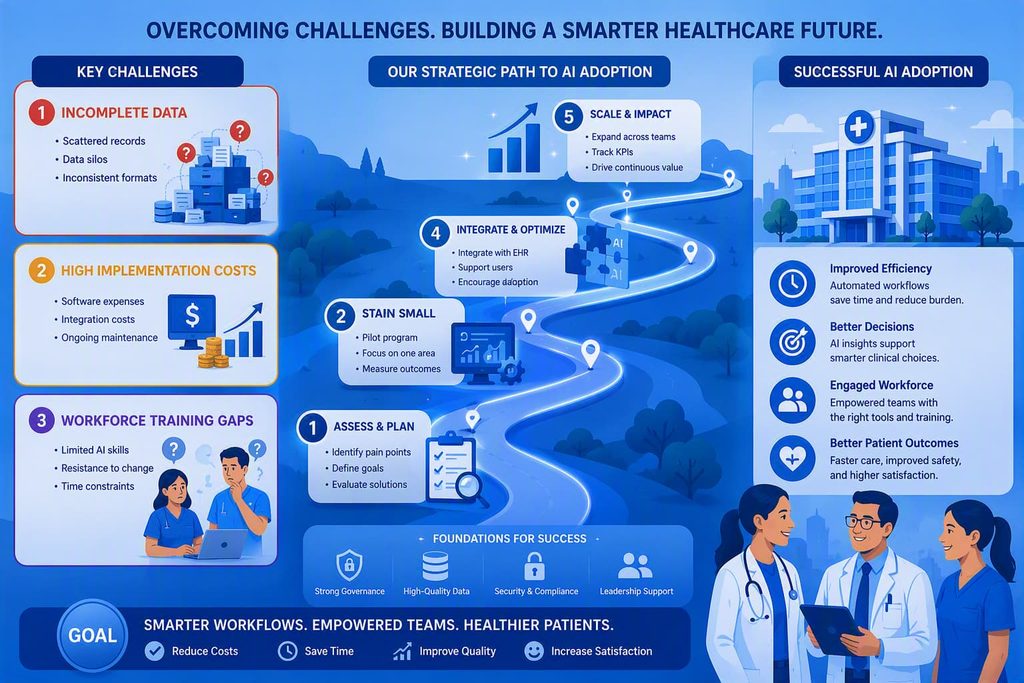
Despite its benefits, AI implementation comes with challenges.
8.1 Lack of Good Quality Data
AI depends on accurate and complete data. Poor-quality information can reduce system effectiveness and limit the accuracy of healthcare recommendations.
8.2 High Cost
Software, training, integration, and maintenance costs can create adoption barriers, especially for smaller clinics and healthcare organizations.
8.3 Lack of AI Skills
Healthcare professionals may require training to use AI tools effectively and confidently.
The most successful organizations start small, measure results, invest in staff education, and scale gradually based on proven outcomes.
The Future of AI for Doctors
The future of AI in healthcare looks promising as technology continues to become smarter and more specialized.
9.1 Faster Disease Detection
Future AI systems will identify health conditions earlier through advanced predictive analytics, continuous monitoring, and real-time health insights.
9.2 Better Treatment Recommendations
AI will support personalized medicine by analyzing patient history, genetics, lifestyle data, and treatment outcomes to recommend more tailored care strategies.
Healthcare professionals interested in future innovations can explore emerging AI tools by profession across healthcare and other industries.
Conclusion
AI for doctors is rapidly becoming an essential part of modern healthcare. From AI medical scribes and medical documentation AI platforms to diagnostic support systems, predictive analytics, and medical imaging tools, today’s healthcare AI tools help physicians work more efficiently while improving patient care.
Rather than replacing doctors, AI acts as a powerful clinical partner. By reducing paperwork, improving clinical efficiency, supporting decision-making, and streamlining healthcare automation, AI allows physicians to focus on what matters most: their patients.
As healthcare technology continues to evolve, practices that adopt the right AI tools today will be better positioned to deliver faster, smarter, and more personalized care in the years ahead.